


Dog & Rabbit’s Showroad
Dog & Rabbit present ‘Showroad’, a new take on the showreel.
Formed out of the late, great 12Foot6, this is Dog & Rabit’s first official film.
Hope you enjoy it. Long live Dog & Rabbit.
The Maple Kind…? The Video That Started It ALL!
Dog & Rabbit present ‘Showroad’, a new take on the showreel.
Formed out of the late, great 12Foot6, this is Dog & Rabit’s first official film.
Hope you enjoy it. Long live Dog & Rabbit.


This is the first time my kitten slept next to the dog. I just got the kitten last week. My dog had a bad dream and woke the kitten in her sleep. The kitten …
ULTRA 2015
We recently shot several commercials for a pet food company
http://www.ultrapremiumdirect.com
The client asked us to use the best shots of the TV campaign to make this “Happy New Year 2015 Video”
SHOT IN GoPro HERO4 Black
PRODUCER : SMALL CREATIVE UNIT
DIRECTORS : OLIVE&BRUCE
ART DIRECTOR : LAURA MARTIN
LINE PRODUCER : NICOLAS VERLHIAC
MUSIC : MANGABEY

At www.EarnOnlineWithoutInvesting.com you can start earning money online today without investing a dime!
Get paid to tweet, write, listen to music (etc)
Check out http://www.EarnOnlineWithoutInvesting.com
Here’s a short film I made of the third annual “Meet The Breeds” presented by the American Kennel Club and the International Cat Association held at the Jacob Javits Center in NYC. Filmed with the Canon 7D and Canon 17-55mm 2.8 Lens. Edited in Premium Pro 5.5 and color corrected with RedGiant Colorista II. www.sweetproductionmedia.com
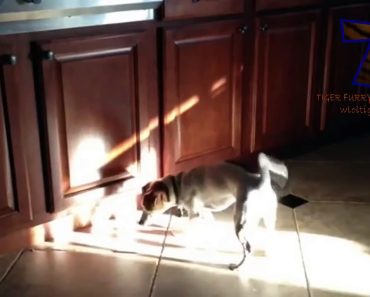
Cats and dogs react to shadows – Funny animal compilation

Sonic gives the Wendy’s “bacon and cheese and pretzel bun” treatment to a hot dog, hoping to capture the taste of summer, plus bacon.
Breslav Hassidim and Franciscan Catholics are told to talk to God in the woods. Gestalt Therapy provides us with many tools to help us get past our own ego trips and really speak to God. Part 1 of this project shows us “dumb hitbod’dut”, all the wrong things to do, while parts 2-7 of this project attempt to demonstrate some of the right things to do to be more successful if and when you do talk to God.
“HITBOD’DUT” CONVERSATIONS WITH MR. H
A LOWBROW, SLIGHTLY IRREVERENT
INTRODUCTION TO BRESLAV THEOLOGY
by franklyn wepner
december 2008
franklynwepner@gmail.com
PREFACE
(a) ON THE HYPOTHESIS OF THIS EXPERIMENT
The teachings of Rabbi Nachman of Breslav, as embodied in today’s Breslav Hassidic sect of Judaism embody a form of what traditionally goes by the name of “Pietism”. Pietism emphasizes faith and simplicity over against complex intellectual explanations of religious matters. But from the day that the Baal Shem Tov, it is said, sought God by talking to Him in the woods and jumping back and forth from one side of a stream to the other, until the day Nachman published his collected essays, “Likutei Moharan”, much water in the stream of Jewish Pietism has passed under the bridge. That is to say, Likutei Moharan is not simple stuff. In order to write what he writes in those pages, Rabbi Nachman had to be well versed in the complex tradition of Pietist religion. Whether he got it from the original sources or from other compilations, he had to know something about the Neoplatonism of Philo, Ibn Gabirol, Judah Halevy , Abu-l-Barakat and Leone Ebreo. He had to know something about the responses of Hasdai Crescas to the Aristotelian Jewish tradition which crystallized in Maimonides “Guide For The Perplexed”. To these two traditions, Nachman of Breslav added a strong emphasis upon the philosophy of language, in the sense that the Word of God is coming to us from a Jewish God who in a profound mystical sense is a speaking God, speaking to us and speaking through us. Though it is hard to find precedents to this in Judaism, we can find it in the work of the Christian theologian Johann Georg Hamann, which appeared, shortly before the time Nachman was born, in Konigsberg, East Prussia, not far from where Nachman lived in Eastern Europe. In the work of Hamann we find much of the philosophy of language which Nachman incorporated into his teachings. In other words, since the teachings of Rabbi Nachman of Breslav are so saturated with the complex tradition of Pietism, they are anything but a return to the naivete of the Bal Shem Tov. In this respect Nachman is deliberately deceptive when he tells his disciples again and again to keep it simple, and rely mainly on prayer.
But he also tells them to study! So he is not preaching mindlessness. Nor is he teaching blind following. His elevation of “the tsaddik of the generation” to the level of highest authority in the community of Hassidim is to be read both in the literal, “pshat”, sense, and also in the profoundest philosophical sense as the Moses-Mashiach element potentially available in every person who submits himself to the theological process outlined in Likutei Moharan. Traditionally in Judaism it is said that each Jew shares in the living reality of Moses receiving the Torah on Mt. Sinai, but for Nachman this notion is merely the tip of an iceberg which is available to those who take the trouble to fathom the ideas of Likutei Moharan.
In view of these elements contained in Nachman’s teachings, it should not be surprising that in what follows here I discover profundity rather than naivete in Nachman’s advice to his disciples that they ought to sequester themselves every day and talk directly to God. Of course, we can talk naively to God in the manner of Tevye in Fiddler On the Roof. That procedure here I label “dumb hitbod’dut”. Dumb hitbod’dut in that sense is in most cases better than no hitbod’dut at all. It can’t hurt, and it might even be more useful than talking to oneself. But I am after bigger fish than that. My goal here is to begin to apply the principles of Likutei Moharan itself to the process of hitbod’dut. This introduction is not the place to spell out the complex principles of Likutei Moharan. You will find some of that in the sequel. Here I will just outline my basic assmptions for this project, which are that
(i) Since Neoplatonism and Hamann’s philosophy of language are examples of dialectical thinking, therefore Likutei Moharan likewise is dialectical thinking.
(ii) Gestalt Therapy also is dialectical thinking, containing both Platonic and Aristotelian aspects.
(iii) Therefore, applying dialectical thinking and Gestalt Therapy principles to hitbod’dut is entirely appropriate.
(iv) Hitbod’dut divested of the Gestalt Thrapy list of “self-interruptions” that rob our actions of their potential for authenticity and effectiveness is better than hitbod’dut saturated with this nonsense. The